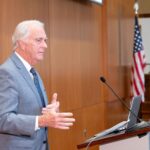
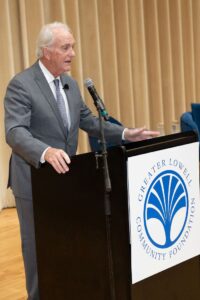
GLCF President and CEO Jay Linnehan at the Fall 2025 Celebrate Giving.
LOWELL – A new survey from the Greater Lowell Community Foundation (GLCF) reveals that federal funding reductions are affecting nearly two-thirds of local nonprofits — through both direct cuts and a cascading ripple effect across the sector.
Of the 41 organizations surveyed, 54 percent experienced direct federal funding cuts, while an additional 10 percent report indirect impacts as partner organizations lose funding, state dollars are reallocated to fill federal gaps, and demand increases from residents losing federal benefits.
“These findings confirm what we’ve been hearing from our nonprofit partners across the region,” said Jay Linnehan, President and CEO of the Greater Lowell Community Foundation. “The impact extends far beyond organizations that receive federal funding directly. When one nonprofit loses funding, the effects ripple outward — straining partners, shifting resources, and ultimately reducing services for our most vulnerable residents.”
Key Survey Findings:
- Sixty-four percent of organizations report being affected — 54 percent through direct cuts and 10 percent through indirect impacts
- Thirty-seven percent report conditions have worsened since Fall 2025, while 39 percent describe mixed conditions
- Low-income families, immigrants, and children/youth are the populations most affected by service reductions
- Sixty-six percent of organizations express concern about long-term financial sustainability
- Only two organizations have fully replaced lost funding; most say it’s “too early to tell”
 The survey revealed significant operational impacts across the sector. Twenty-two organizations reported increased staff workload and stress, while 13 have had to eliminate programs or services entirely. The sector’s most vulnerable clients — including 24 organizations serving low-income families, 19 serving immigrants and undocumented individuals, and 19 serving children and youth — are bearing the brunt of these reductions.
Organizations are responding with diversified funding strategies. Thirty-five organizations have applied for foundation grants and increased individual donation efforts, while 22 have pursued state or local funding. However, 13 organizations have been forced to dip into reserves — a concerning indicator of financial strain.
 When asked what support would be most helpful, the response was clear: Thirty-seven of 41 organizations identified unrestricted, flexible funding as their top need. Organizations also expressed strong interest in collaboration, with 86 percent indicating they are somewhat or very interested in partnering with other nonprofits on shared challenges.
“The Greater Lowell Community Foundation is committed to supporting our nonprofit partners through this challenging period,” said Linnehan. “We will continue to prioritize flexible funding, facilitate collaboration across the sector, and advocate for the resources our community needs to thrive.”
The executive summary of the survey report is available at: https://glcfoundation.info/3ObIP0l.
 To contribute to GLCF’s Resilience and Care Fund, the foundation’s rapid response fund, visit: https://glcfoundation.info/resilience.