
“We proceeded professionally at the time that we proceeded.”
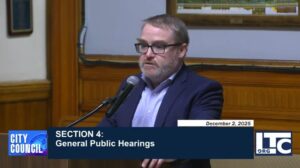
Last night, the City Council met to consider a loan order seeking an additional $40 million for the Lowell High School project. The quote above—“We proceeded professionally at the time we proceeded”—was offered by Jim Dowd, the public face of Skanska, the City’s project manager. He delivered this line while responding to Councilor Belanger, who asked whether Skanska could/should have done more to avoid the massive overrun. In plain language, he was being asked to explain what appears to be a fundamental failure in the project manager’s duty of care.
When cities undertake major public-construction projects—especially complex school renovations—the Massachusetts School Building Authority (MSBA) requires the hiring of a Project Manager (PM). The PM is not ornamental; this requirement exists precisely to protect municipalities and taxpayers from runaway construction costs.

Before any work begins, the PM must conduct a thorough investigation of the building’s structural integrity, utilities, hazardous materials, and architectural conditions. This phase is crucial: it defines the actual scope of work, the realistic timeline, and the budget. A competent evaluation identifies risks so that contingencies are sized appropriately.
When this phase is done well, surprises are minimized. When it is not, the project becomes a financial minefield.

In Lowell’s case, the city’s project manager failed to ensure adequate pre-construction testing, most notably the drilling of bore holes in the basements of the 1892 and 1922 buildings. This omission delayed the discovery of a defective floor—an avoidable finding had the PM performed its basic responsibilities. Because the discovery came so late, the entire project timeline was pushed back by a full school year.
The consequence? We now must pay contractors an additional year’s worth of labor costs.

This was not a case of unforeseeable surprises unique to century-old buildings. Indeed, this seems to be Skanska’s favorite excuse. This excuse is pure bullshit. Renovations always carry unknowns; that’s why a competent PM builds contingencies to absorb them. The problem here was not the age of the buildings (or where they are located) —it was inadequate investigation and a contingency fund too small to account for foreseeable risks.
 To make matters worse, while the MSBA was involved from the outset, its funding is not guaranteed. Reimbursement is limited to eligible, pre-approved costs. Any cost above those limits becomes the responsibility of the City. Because Skanska failed to anticipate and identify the true scope of the project, the full $40 million overage now lands squarely on Lowell taxpayers.
Against this backdrop, probing questions from councilors on behalf of taxpayers are entirely appropriate. However, Mr. Dowd appeared visibly annoyed at being questioned about a $40 million overrun—money that, by all accounts, stems from failures in oversight on his firm’s watch.
It was the kind of posture rarely seen in the private sector. Most employees would not survive responding to their employer with indignation or irritation when being asked to explain a multi-million-dollar mistake. Yet the taxpayers—Skanska’s ultimate employer in this scenario—were (and routinely have been) treated to precisely that. (Judge for yourself around the 40-minute mark of the meeting).

[Author note – initially, I thought the loan order passed. This was reflected in an earlier draft of this blog. The source of my confusion is explained in the comments below. However, as you can see, Councilor Jenness pointed out that the loan order failed. I amended this blog to reflect the accurate result of the vote.]
Despite all this, the Council’s options appear somewhat limited. Lowell has a binding agreement with the MSBA to deliver the project as designed. Refusing the additional funding could trigger far worse consequences. Ultimately, a minority of councilors opted to roll the dice. Councilors Gitschier and Descoteaux voted in opposition. Councilors Nuon and Robinson were absent. As a two-thirds majority of the full eleven-member council was required— the seven affirmative votes amounts to a percentage less than the necessary 2/3.

I have no idea where we go from here.













7 responses to “Government Was Happening: December 2, 2025”
The loan order did not pass.
It does require a 2/3 majority of the council members (8 votes), not just the present councilors.
I texted the Manager to ask “what’s next” after the meeting, and he will be working with the project team to bring back another proposal.
Thank you, Councilor – clearly I misunderstood the result of the vote. The clerk often says “fails” after a negative vote. I didn’t hear that last night and the Mayor went on to the next agenda item.
The vote shouldn’t pass at all. Someone needs to hold the OPM accountable. Years prior they said and I qoute “We poked holes everywhere in the building we wont have any surprises”. Guess what there is a 40 million dollar surprise now and we the taxpayer are on the hook. City of Lowell should bring legal action to the OPM immediately.
Good assessment of the problem. Also, since the majority of the additional cost is not the work to correct the deficiencies, but the schedule delay that results from the late discovery, the total cost would have been reduced by timely risk management testing.
This is the biggest mistake in the history of Lowell, not building a brand new modern high school out of downtown Lowell. This just adds to the entire mess. From what I am hearing, there are already issues in the new buildings that have been constructed. 👎😟👎
🤔 https://wmur.com/article/settlement-design-error-new-hampshire-hospital/69624934
I think that BOTH the city of Lowell and Skanska should take a more diplomatic and reasonable approach to the Lowell High School 40 million cost overrun. Why, because if they don’t, this will turn into Lowell’s “BIG DIG”!
There should be documentation of all the unforeseen issues and the impacts they had on the costs. Have the project manager show the efforts made to try and mitigate them and why they were unavoidable. I would then appeal to the state for additional aid. I, personally, in this instance, would not initiate a legal challenge. Instead, I would go the legislative route, and as YOUR State Senator, file a bill to ammend mass general laws or the MSBA’s enabling statute (Chapter 208 of the Acts of 2004) to change and ammend how MSBA determines eligible project costs or how it handles unforeseen issues and overruns.
As YOUR State Senator, I would advocate for a supplemental appropriations bill to provide additional one-time funding for projects like this one facing extraordinary and unanticipated cost escalations, and the great need to prevent delays, which would ultimately hurt the school children, as well as the hardworking taxpayers. Supplemental budgets are often used for such pressing needs. As YOUR State Senator, I would always seek the collaborative and compromise route. Jeanne Balkas Unenrolled Candidate for State Senate