 by Lowell City Councilor Corey Robinson
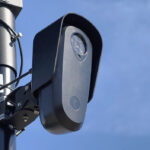
I have always felt, as an elected official, that one of the many responsibilities we have is to ensure a safe community for all of our residents. As technology evolves, the tools used to provide that safe community continue to change. One of these tools has become extremely controversial recently, the usage of ALPRs (Automatic License Plate Readers).
I have heard loud and clear the valid concerns raised by our neighbors regarding the usage of this tool by our community’s law enforcement professionals. I also have read some of the stories of this technology being used incorrectly, magnifying some of the concerns our residents have raised. I felt a moral obligation to educate myself on this technology in order to understand as much as possible about this newer application that has raised significant concern.

I was fortunate to receive a demonstration of this system. I was able to see exactly how and what this technology does for our law enforcement operations. After hearing from many members of our community, I also had many questions. As one of our neighbors asked, “Who polices our police?”.
After observing this technology, I do believe we have an obligation to ensure there are rigid policies around the usage of such a tool. I do see the value in its usage for our employees.

I was relieved to see firsthand how the captured images show the vehicle and plate, not the operator or passengers. I was also comforted to see the internal audit process baked into this technology.
As a user (with an assigned id) accesses this system, the first thing they see is a usage disclaimer which they have to agree to holding them to legal, authorized usage.
 In order to initiate a search, the identified user needs to select from a drop-down menu as to the reason why they are utilizing the system. These options contain an array of options such as hit-and-runs, human trafficking, abductions, etc.
I was relieved there weren’t any broad categories such as other. The other option to justify the reason for initiating a search is if the user inputs a specific assigned case number.

Once the “why” is input, the user then can search based on a full license plate, a partial plate, vehicle make, model, color, trim, etc. They can also select a time frame for their search.
Based on the input search parameters, images of vehicles with the matching searched information appear.
In all of the images I witnessed, not one showed a clear picture of an individual person. The images show dates and times as well as locations.

All of this data is erased on a rolling 30-day basis according to the contract. It is our organization’s responsibility to download and back-up relevant information used in an investigation to a local-controlled database.
The audit feature is a key piece to ensuring proper usage. Any and all usage of this technology by registered users is monitored, documented, and in some instances flagged for review.
 Overall, after hearing our neighbors concerns, witnessing a demonstration of this system, I do believe their is a path forward to provide peace of mind and reassurance for our members of the public, while providing our law enforcement professionals what can be a valuable tool to provide that safe community we all deserve.
As with all things in our city, we have much work to do. I am fully aware there are some that disagree and I respect their stance. I will remain open to hearing all views and thoughts on this technology and its application in our community.
Here is the link to our Lowell Police Department’s ALPR policy:
https://lowellpolice.org/…/330.08-ALPR-Flock-September…