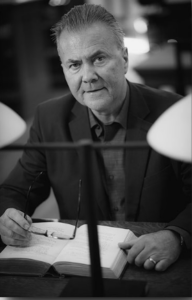
Photo courtesy Kevin Harkins Photography
by Stephen O’Connor
It was 1966, and my father came home with a 2 LP Box Set and companion book called The Irish Uprising, 1916-1922, narrated by Charles Kuralt, and released to commemorate the 50th anniversary of the Easter Rising. I was eleven years old and had little knowledge of Ireland or Irish history. I knew that three of my grandparents were from a place called Ireland, while one was born in Lowell of parents from Ireland, and that at family parties we would hear the songs of that country.
A cursory interest became a deep interest overnight when my father began to play the record on the stereo console in the living room. Soon I was playing it, over and over. The records were well produced, and included interviews with participants in the uprising still living at the time, rousing or plaintive rebel songs, the poetry of Yeats, a stirring rendition of Patrick Pearse’s funeral oration at the grave of O’Donovan Rossa, and the first song I had ever heard in Irish, “Óró, sé do bheatha ‘bhaile.” Before that, the only words I had ever heard in Irish, or Gaelic, were “Erin Go Bragh.” It had not occurred to me that there was actually a spoken language with a rich literature. Quite suddenly, my eyes were opened to an inheritance of which I had been unaware.
 Here I was, an American of Irish descent, yes, but a boy who at that time had never set foot in Ireland, thoroughly identifying with the Irish struggle for independence. The message that came through to me clearly from those songs, speeches and poems was the necessity of being willing to die for the cause.
So wrap the green flag ‘round me, boys,
To die were far more sweet
With Erin’s noble emblem ‘round
To be my winding sheet.
Looking back on it, much of what I listened to at the time involved martyrdom. I was fascinated with the photos of the men who had been executed; I read the “Speeches from the Dock,” and mourned for young Kevin Barry.
Another martyr for Old Ireland
Another murder for the crown,
British laws may crush the Irish
But cannot keep her spirit down.
Informers, heroes, martyrs, patriots, and defiance of “the cannon and the crown”— it was a heady brew. I sympathized deeply with the struggle of people who, in Pearse’s words, had, “no treasure but hope, no riches laid up but the memory of an ancient glory.” And all of this feeling was engendered through poetry and song. In a poem called “The Man and the Echo,” Yeats, referring to his play Cathleen ni Houlihan, asked, “Did that play of mine send out Certain men the English shot?” There can be little doubt that it did.
 I was and always will be far more American than Irish, yet I understand perfectly how, in another place and another time, I might have been roused to take up a gun, to “march with O’Neil to an Irish battlefield.” Injustice will always engender resistance, but the real force multiplier was words—the power of words. I think it was this realization that prompted me eventually, not to join a flying column, but to want to become a writer.
Ireland, which is the size of Maine, has long punched above its weight in literary terms. The Irish found in words the power that they lacked politically and economically. It always seemed to me that the Irish lived a life more fully integrated with words, the stirring rebel song, the mournful love song, the humorous story about “your man,” and “the other fella,” and of course, the satirization of their oppressors:
The queen she came call on us
She wanted to see all of us
I’m glad she didn’t fall on us
She’s eighteen stone.
 In the end, war and conflict, though sometimes necessary, are never as glorious as peace and tranquility. When the time came, I’m thankful that there were those with the right words to silence the guns: Bill Clinton and George Mitchell on this side of the Atlantic, and John Hume, David Trimble, Adams and McGuinness of Sinn Féin and the Women’s Coaltion, particularly Monica McWilliams and Pearl Sagar. Listen, sometime, to Phil Coulter and the people of Derry singing “The Town I Loved So Well.”
For what’s done is done and what’s won is won
And what’s lost is lost and gone forever
I can only pray for a bright brand new day
In the town I loved so well.
Those are words we’d like to hear echoed in towns and cities across the world.
Stephen O’Connor’s books can be found at lowellwriter.com.