
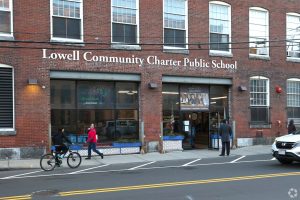
 LOWELL – New state data released by the Department of Elementary and Secondary Education (DESE) reveals a consistently high average daily attendance of 96% for the past three years, following a post-Covid low of 92.7%, and a concurrent drop in chronic absenteeism at Lowell Community Charter Public School (LCCPS).
The average daily attendance rate post-Covid for the state was 92.5%, increasing to just 93.2% for the 2025-2026 school year. Massachusetts’ statewide chronic absenteeism rate stands at 18.8% for the 2025–26 end-of-year school data. However, LCCPS significantly outperformed the state average, with a 7.9 % chronic absenteeism rate, following a post-covid high of 23.6%, which demonstrates notable progress in keeping students engaged and in school.

The school attributes its reduction in chronic absenteeism to its strong family communication commitment, including increased written communication with families and consistent positive reinforcement with students.
As part of its Positive Behavioral Interventions and Supports (IBIS) program, it celebrates student attendance, where students are recognized for perfect attendance. It also conducts parent listening sessions, curriculum nights, adult family education programs and other events and programs that keep students and their families engaged.

In Massachusetts, chronic absenteeism is defined as missing at least 18 days during a standard 180-day academic year (approximately 10% of total school days). Although rates have decreased since reaching a post-pandemic peak of almost 30% in 2022, statewide chronic absenteeism continues to exceed the pre-pandemic baseline of 13%.
 “Our strong attendance numbers over the past three years are a testament to the total team effort from our entire community. From creating and delivering engaging curriculum, to the establishment of welcoming classroom communities, to supporting students’ social and emotional wellbeing and collaborating with our families, Lowell Community Public Charter School is truly a place that everyone feels good about coming to every day,” said Nicholas Leonardos, LCCPS Executive Director. “Every day we see students happy to be here and happy to learn, and it takes all the adults working together to make that happen.”
According to the U.S. Department of Education, chronic absence derives from multiple, often interconnected factors. However, research points to student disengagement, lack of access to student and family support, and student and family health challenges as significant drivers, especially since the pandemic. Hispanic or Latino, American Indian or Alaska Native, English learners, high-needs and low-income student populations continue to be the most impacted by chronic absenteeism statewide.