
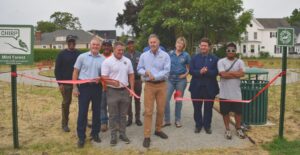
Department of Fish and Game Commissioner Tom O’Shea cuts the ribbon with City Councilor Corey Robinson, Mayor Erik Gitschier, state Rep. Rodney Elliott and others earlier this month. (Photo Courtesy City of Lowell)
LOWELL — The City of Lowell and the Massachusetts Department of Fish and Game came together and opened a new mini forest and pollinator garden in the Centralville neighborhood, creating a corridor of green space and habitat that will increase biodiversity, climate resilience, and opportunities to experience nature in a densely populated, urban area.
The Centralville Habitat Interconnected Restoration Project (CHIRP) was created thanks to a $173,157 Massachusetts Community Biodiversity Grant provided by the Massachusetts Department of Fish and Game. It was designed by a three-person team of designers and landscape architects from the City of Lowell’s Department of Planning and Development: Reese Reiling, Jess Wilson, and Brianna Martinez, Design Planners at the City of Lowell.

CHRIP is located on a previously unused hill between Bridge Street and the Henry J. Robinson Middle School, and on a previously vacant parcel at 13th and June streets, adjacent to the school. The project neighbors both Gage Field and McPherson Park, and creates a biodiversity corridor in the neighborhood that will allow wildlife to travel from green space to green space.
The City’s most recent master plan, “Lowell Forward,” identified the need for an increased tree canopy and stronger environmental resiliency across the city, and CHIRP provides both, while also increasing biodiversity and opportunities for city residents to experience nature.

The urban mini forest saw thousands of trees and shrubs planted using the Miyawaki method, which includes positioning plantings much closer than average planting methods in order to speed growth and development. The Miyawaki method creates competition between plants and enables the forest to reach maturity decades earlier than a traditional forest. Approximately half of the plantings will eventually die, but that is an expected natural process that will help maintain soil moisture. The forest will require maintenance for two to three years, but after that will be completely self-sustaining.
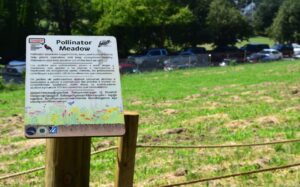
Educational signage at both the mini forest and pollinator meadow will help residents learn about the environment and the importance of biodiversity. (Photo Courtesy City of Lowell)
The forest includes a circular stone pathway and two benches, as well as several educational signs so visitors understand the importance of biodiversity and create a connection to the environment. It’s divided into several sections, including one comprised of native trees that will flower and attract pollinators, another that will provide bright colors in the fall, another with taller trees that will create shade, and another with trees that are known to attract birds.
Centralville District Councilor Corey Robinson has been an active proponent of using the green space on the hill between the Robinson School and Bridge Street more efficiently. The pollinator meadow turns a previously underutilized space into a biodiversity hotspot.
“A successful urban environment is characterized by inclusivity, sustainability, and vibrant public spaces that foster community interaction,” said Councilor Robinson. “Any opportunity that presents itself to preserve green-space and blend nature into our urban environment. I have heard loud and clear from my neighbors that is an opportunity we want to take advantage of. I hope this is the first of many projects we can implement to combat overdevelopment. Thank you to all that made this possible.”

The meadow also includes four bee hotels that were built and painted by students from the Robinson School, who studied the importance of pollinators to the environment. Bee hotels act as homes for solitary bees to visit for shelter, foraging and nesting. The hotels give bees a safe haven where they can flourish in an urban environment.
“The Robinson Middle School students and staff are looking forward to the pollinator meadow,” said Bridget Dowling, Principal of the Robinson Middle School. “We believe it will be a vibrant, living classroom that brings science and sustainability to life. The native plants, buzzing with bees, butterflies, and other pollinators, will provide students with a daily reminder of the importance of environmental stewardship. This beautiful space will not only support local ecosystems, but will also inspire curiosity, responsibility, and pride in caring for our shared environment.”
 “It’s nice to have pockets of green space around the city, but if we can create areas where wildlife can get in between those spots, it is even more helpful,” said Reiling. “We’re working to connect green spaces in the city as much as we can.”
The grant from the Massachusetts Department of Fish and Game is part of a $1.1 million investment by the Healey-Driscoll Administration to fund 12 community-led initiatives across Massachusetts that enhance habitat restoration, expand urban forestry, pilot biodiversity-friendly practices, and increase public education and awareness.
Department of Fish and Game Commissioner Tom O’Shea, Councilor Robinson and Mayor Erik Gitschier attended a ribbon cutting for CHRIP earlier this month.
“The CHIRP project is a wonderful opportunity of transforming underutilized spaces in our community and being able to have a beautiful green space which will increase biodiversity within Lowell,” said Mayor Erik Gitschier. “This project will not only bring together students from the Robinson Middle School, but also neighbors in the community who have been looking forward to having more green space. I look forward to seeing more projects like this that will positively impact Lowell’s environment and wildlife.”
 “Each and every one of us has a role to play in conserving our state’s irreplaceable biodiversity. The City of Lowell’s CHIRP project is a shining example of what’s possible when communities come together to take action to protect biodiversity and enhance connection to nature in our urban cities,” said DFG Commissioner Tom O’Shea. “Thanks to the City of Lowell’s leadership and the community’s support, the Centralville area has been transformed into a thriving miniforest and pollinator garden for neighbors, students, and pollinators alike to enjoy. As someone who grew up in Lowell, I am especially proud to see the next generation of environmental stewards learn from and care for this new wildlife habitat right outside their classroom.”
-
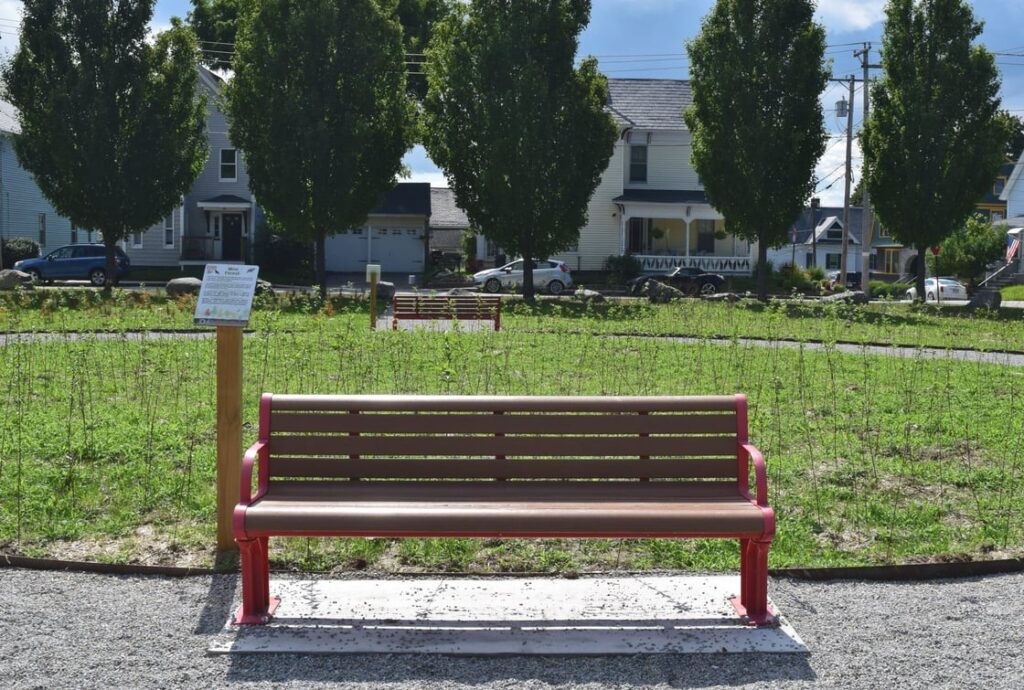
- Two benches are part of the just-planted urban mini forest. (Photo Courtesy City of Lowell)
-
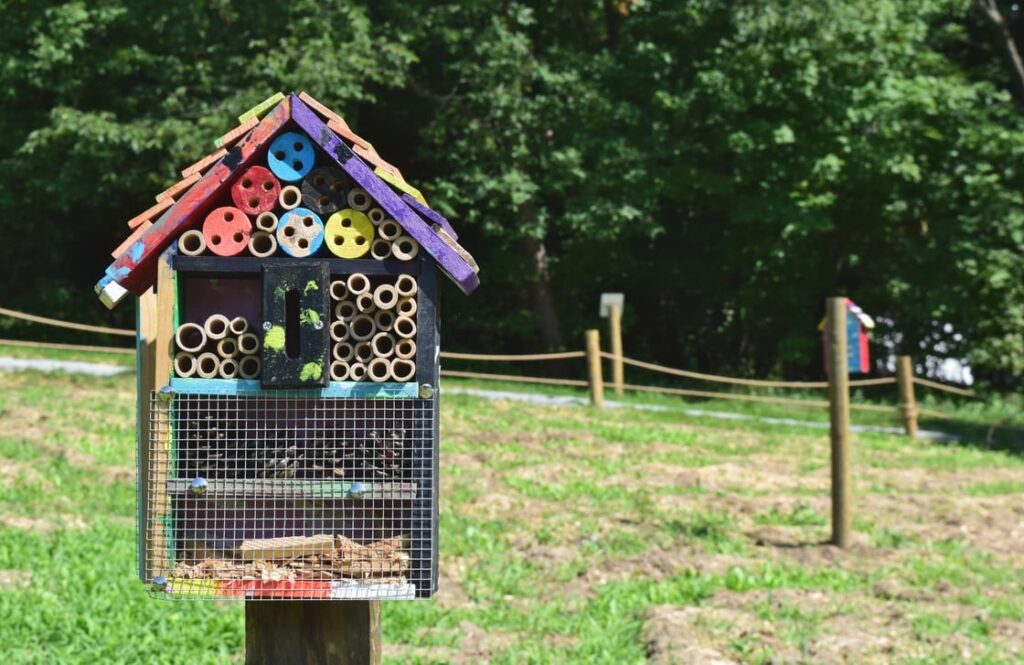
- One of four bee hotels built and painted by Robinson Middle School students (Photo Courtesy City of Lowell)
-
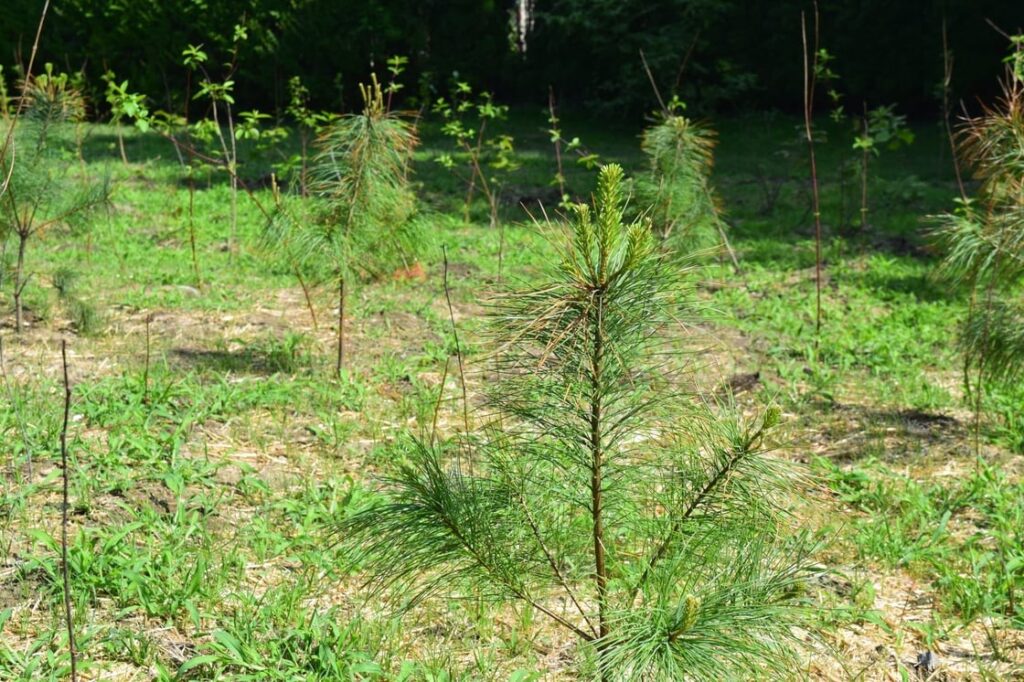
- The mini forest was planted using the Miyawaki method, enabling it reach maturity decades earlier than a traditional forest. (Photo Courtesy City of Lowell)
-
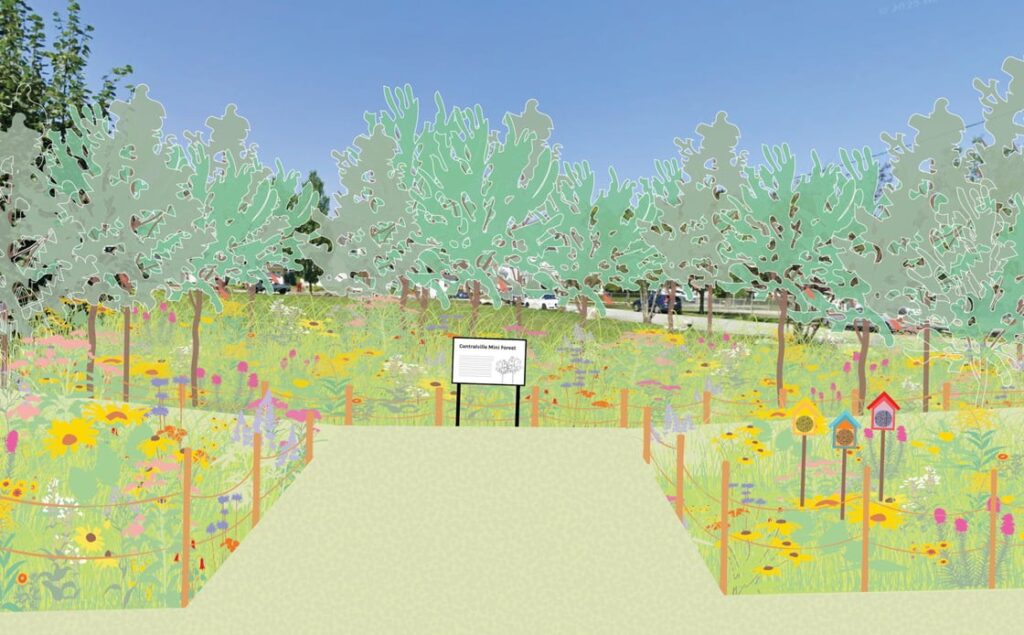
- An artists conception of how the urban mini forest will look as it reaches maturity. (Photo Courtesy City of Lowell)















3 responses to “CHIRP CHIRP: New Urban Mini Forest and Pollinator Meadow Opens”
Today’s ‘Letter to the Editor’, August 21, 2026 in the Lowell Sun, https://www.lowellsun.com/2026/08/21/commentary-we-helped-elect-robinson-but-heres-why-we-are-backing-betts/
The “hit job” letter criticizing City Councilor Corey Robinson’s legislative record completely misunderstands how municipal government works. The authors claim that filing 91 motions in 2025 shows a “lack of priorities.” In reality, it shows a councilor who actually listens to his constituents.
Every single one of those motions represents a neighborhood issue from broken sidewalks to traffic safety, brought to Councilor Robinson by a concerned resident, the hardworking taxpayers! To fault an elected official for requesting the city administration to address 91 community/citizen concerns is a bizarre twist of logic!
The collective writers blame Councilor Robinson because the city administration did not completely respond to 35 of those motions, but, if a doctor writes 91 prescriptions and the pharmacy only fills 56, you don’t blame the doctor, you fix the pharmacy. True collaboration isn’t about avoiding friction or quietly blending into a 160-member legislature, its about standing with working families against a slow and ineffective bureaucracy!
We face a clear choice between four years of proven, elected legislative experience on the City Council or a candidate whose primary qualification is spending less than a year as an unelected legislative aide. Beacon Hill is already full of quiet insiders who go along to get along. We don’t need a representative who is just happy to be in the room, we need a proven fighter like Councilor Corey Robinson who brings the concerns, demands accountability, and refuses to let our district be ignored.
TYPO! It’s 5 YEARS of proven, elected legislative experience on the Lowell City Council!
Also, so Iam not being misinterpreted, my “fix the pharmacy” analogy is meant as fixing, nothing more.
The City of Lowell utilizes an official “Outstanding Motions Tracker” report to monitor council requests. It is quite common for dozens of council motions to sit “In Progress” or unaddressed for long periods.
Keep in mind there has been MASSIVE city wide budget cuts and layoffs, so the city does not have the personnel sometimes to quickly respond to councilor requests. This isn’t about blaming the management or the administrative TEAM, it’s about fairly acknowledging the SEVERE resource limits they are forced to work under, and the only way this can be “fixed” is at the state level and who WE elect!