
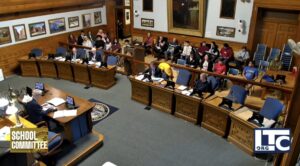
 If you’ve been following recent School Committee discussions, you’ve heard about budget gaps, difficult decisions and potential cuts. Naturally, many residents are asking: How did we get here?
Part of the answer is important to acknowledge. During the pandemic, districts including Lowell used federal ESSER funding to support students through an unprecedented time. That funding allowed us to add positions, expand supports and respond to learning loss and mental health needs. These were not extras, they were necessary investments in our students.

But those funds were always temporary.
Now that they have expired, we are left with ongoing needs without the same level of support. That is not about blame, it is about understanding the reality in front of us. And it does not make the decisions any easier especially for those of us with children in the system who feel these impacts every day.

Because for me (and so many of us), this is personal.
I have children in the Lowell Public Schools. This is not just a budget conversation or a policy debate. These decisions affect classrooms, supports and opportunities that I see firsthand as both a parent and a policymaker.

And while this is deeply personal, it is also important to understand this is not just a Lowell problem.
Across Massachusetts, districts of all sizes are facing the same pressures. In Boston, officials are proposing cuts of hundreds of positions to close a budget gap of more than $50 million. In Brookline, leaders have warned of significant staffing reductions and program impacts tied to a multi million dollar shortfall. And in Lexington, dozens of positions are being eliminated and many early career educators are receiving non renewal notices as the district works to close its own gap. Communities from urban to suburban to rural are all grappling with similar challenges. This is a statewide issue.
 But just because it is happening everywhere does not make it any easier here.
So what is driving this?
Simply put, the cost of running a school system is rising faster than the funding districts receive.
We are seeing significant increases in:
- Special education costs including out of district placements and services
- Transportation, including McKinney-Vento transportation for students experiencing homelessness and transportation for specialized needs
- Health insurance and contractual salary obligations
- General inflation impacting everyday operations
 For several years, federal relief funding helped stabilize school budgets. In many ways, it masked underlying structural challenges. Now those challenges are fully exposed.
School committees across Massachusetts are now being forced into decisions that impact class sizes, staffing, programming and student support. These are real impacts felt in every school building.
And in a community like Lowell, those impacts are even greater.
As a high-needs district, we serve many students who rely on additional supports, including multilingual learners, students with disabilities and families who depend on schools for more than academics. When funding does not keep pace with costs, the strain is felt more deeply here than in more affluent communities.
That is why how we talk about this matters.
 This is not about mismanagement. This is not about a lack of effort. This is about a system that is not keeping up with the real cost of educating our students.
In fact, I wrote about many of these broader budget pressures just last week in an op-ed, Facing Lowell’s Budget Challenges Together, and those challenges continue to evolve as we move deeper into this budget season.
And while we must make responsible decisions locally, we also need to be strong advocates beyond Lowell.

We should be joining other districts to push for:
- Increased support for special education costs
- More equitable transportation reimbursements
- Greater stability in school funding
At the same time, we owe our community honesty. Residents deserve to understand what is happening, why decisions are being made and what it means for students moving forward.
 If you want to better understand the discussion and the decisions ahead, I encourage you to watch the full School Committee budget hearing from April 1 here: https://www.youtube.com/live/-o5tLzlD9FU?si=tD-RJGgqg6MsYx8D
These are hard conversations. For many of us, they are emotional ones.
But they are necessary.
Because this is not just about a budget.
 It is about our kids. Their classrooms. Their teachers. Their future.
And that is something worth fighting for together.
















4 responses to “Lowell Isn’t Alone: Understanding the School Budget Crisis Across Massachusetts”
As it pertains to McKenny-Vento transportation, Dr Pinto was incorrect in stating that the state’s reimbursement to the school district was minimal. In fact, the reimbursement was 85% last year.
Thank you for the clarification. Very helpful!
This entire budget smacks of corruption, bloat at the top, and ineffective leadership. They have meaningful and important positions in the chopping block but no vision about how to run the schools. Why does the ineffective CFO making an outrageous salary need a deputy CFO making 6 figures? If schools have to create their own budgets, his job should be easy. We don’t need 2 assistant superintendents who divide schools and curriculum – the very idea is nonsensical. The headmaster was too weak to even show up and defend the budget he created, which smacks of poor judgement. Lowell needs to wake up and remove these people from our schools. The kids deserve so much better.
The American School Counselor Association recommends a counselor-to-student ratio of 1:250. At Lowell High School, this ratio is beyond 350:1 and approaching 400:1 for certain positions. Leadership is looking at cutting counselors, clerks who do scheduling for these counselors, and other student support positions.
Questions have been raised about non-student-facing positions that were created with this temporary federal funding:
Are these positions being considered for cuts?
If not, can we know what these positions provide that makes them more necessary than directly student facing roles?
Can leadership confirm that hiring decisions for these roles were made through a fair, transparent process free from personal connections to decision makers? And that decisions to keep those roles are similarly fair?